









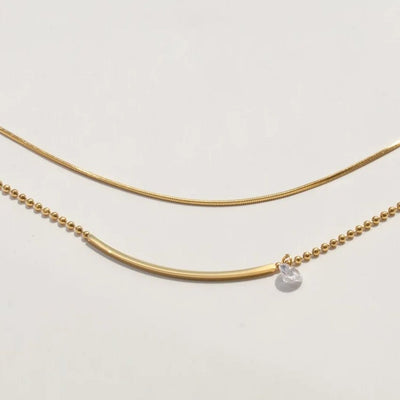

What is PVD gold plating?
PVD stands for physical vapour deposition, a way of bonding a thin film of gold to a metal base. Here is how it works, and how it compares with gold plating, gold filled and solid gold.
By Raine & Co Care TeamMaterials, care and sizing
In short
- PVD bonds a thin, even film of 18k gold to the piece inside a vacuum chamber.
- Every Raine & Co piece has a 316L stainless steel base under the gold.
- PVD generally bonds more firmly than traditional plating; solid gold is gold all the way through.
If you have shopped for gold jewellery lately, you have probably seen "PVD" next to the price. It describes how the gold is put onto the piece. Every Raine & Co piece is finished this way, in 18k gold on a 316L stainless steel base, so here is what that means in plain terms.
What PVD means
PVD stands for physical vapour deposition. The jewellery is placed in a sealed vacuum chamber. Gold is turned into a vapour and settles on the surface of each piece as a very thin, even film that bonds to the metal underneath.
Because the gold arrives as a vapour, it reaches every surface evenly: the inside of a ring, the back of a stud, the links of a chain. The result is a smooth, consistent colour all over.
What the 18k means
Gold is measured in carats out of 24. Pure gold is 24 carat. 18 carat gold is 18 parts gold to 6 parts other metals, which is why it has a rich, warm colour. Lower carat golds, like 9 carat, look paler and more yellow. When a PVD finish is described as 18k, the gold in the film is 18 carat.
What is underneath: 316L stainless steel
The base of every piece is 316L stainless steel. 316L is a grade of stainless steel widely used in watches and jewellery. The L stands for low carbon. Steel is strong, so pieces can be fine and light without bending out of shape.
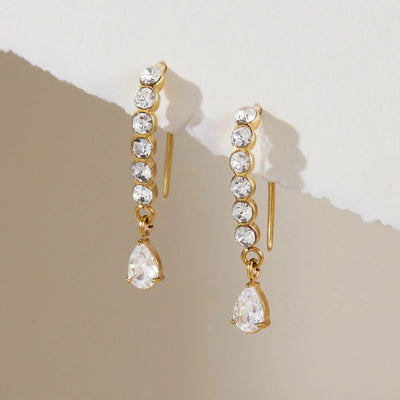
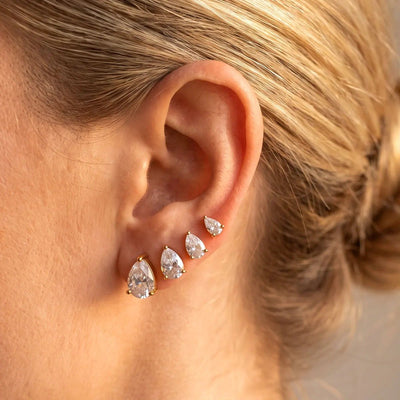
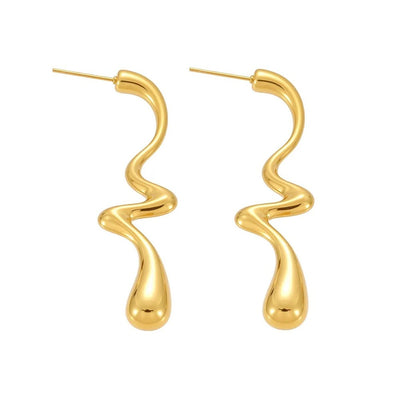
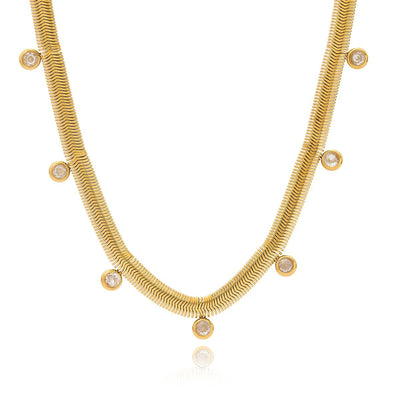
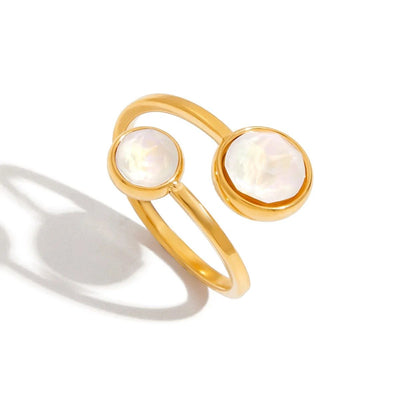
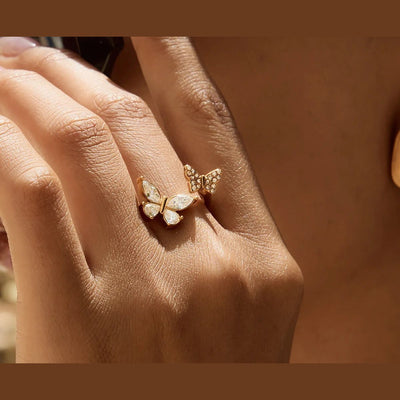
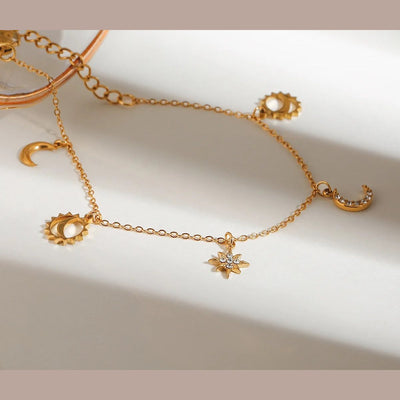
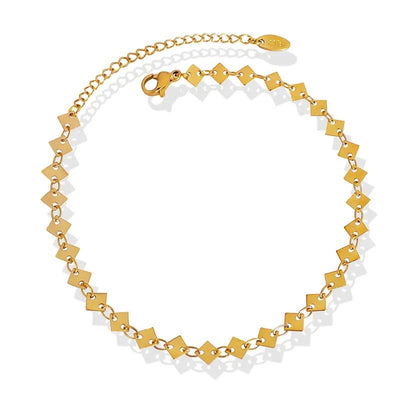
Pieces in 18k gold PVD
How PVD compares
There are four common kinds of gold jewellery. They differ in how the gold is applied, what is underneath, and how much gold there is.
| Feature | 18k gold PVD | Gold plated | Gold filled | Solid gold |
|---|---|---|---|---|
| How it is made | Gold vapour bonded to steel in a vacuum | Dipped in a gold solution with an electric current | A thick gold layer bonded with heat and pressure | Gold alloy throughout |
| Underneath | 316L stainless steel | Usually brass or copper alloy | Usually brass | Nothing |
| Gold layer | Thin, even film | Thin, often thinner than PVD | Many times thicker than plating | Gold all the way through |
| Price | Everyday | Lowest | Mid to high | Highest |
Gold plated
Traditional gold plating, or electroplating, dips a piece into a liquid containing gold and uses an electric current to coat it. It is the most affordable way to make gold jewellery. PVD generally bonds more firmly to the surface than traditional plating.
Gold filled
Gold filled jewellery has a much thicker layer of gold, bonded to a core, usually brass, with heat and pressure. It costs more than plated or PVD pieces.
Solid gold
Solid gold is gold alloy all the way through, usually 9, 14 or 18 carat. It is the most expensive option and the one most people save for engagement rings and heirlooms.
Why we chose PVD
We wanted jewellery you can wear every day and buy without saving up: real 18k gold colour, an even finish on every surface, and a strong, light steel base, at prices from R299. PVD on 316L stainless steel gives us all of that.
Looking after PVD gold
Any gold finish over another metal wears with friction over time, and how quickly depends on how it is worn and cared for. Put pieces on after perfume and lotion, take them off before water and exercise, wipe them with a soft cloth and store them in their pouch. Our care guide has the full routine.
Questions
Is PVD gold real gold?
Yes. The film contains real gold, in our case 18 carat. It is a thin layer over a steel base, not solid gold.
Is PVD better than gold plating?
PVD generally bonds more firmly and coats more evenly than traditional plating, and it is usually applied over steel rather than brass.
Will PVD gold fade?
Any gold finish over another metal wears with friction over time. Following the care guide keeps it looking its best for longer.
What is 316L stainless steel?
316L is a low carbon grade of stainless steel widely used in watches and jewellery. It is strong, so pieces can be fine and light without bending out of shape, and it is the base under every Raine & Co gold finish.
How do I look after PVD gold jewellery?
Put pieces on after perfume and lotion, take them off before water and exercise, wipe them with a soft cloth after wearing and store each one in its pouch. Our care guide has the full routine.


